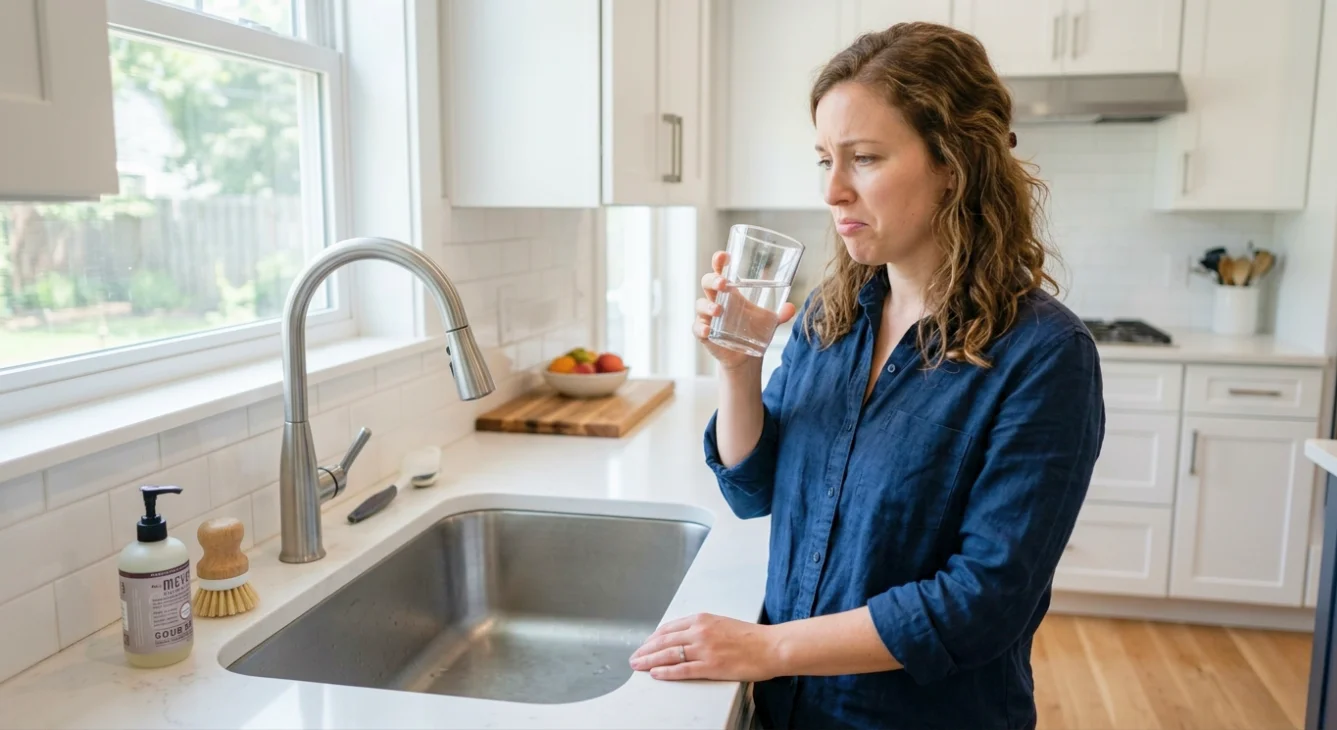
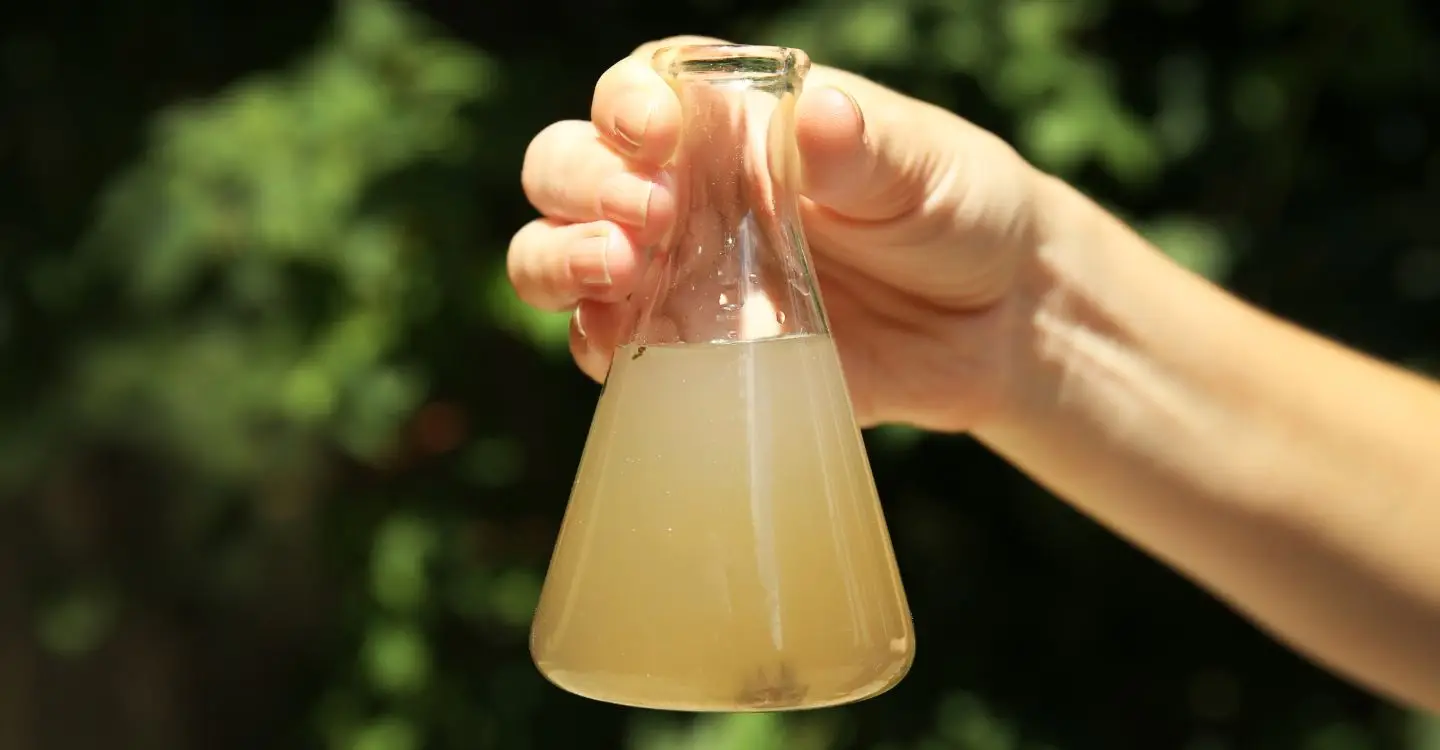
Hoboken is a city where history and modernity are in a constant state of negotiation. Walk down any block, and you’ll see 19th-century brownstones standing shoulder-to-shoulder with 21st-century luxury condos. For the residents of our iconic townhouses, the kitchen is the heart of the home, a place where architectural heritage meets daily life.
However, in a recent water quality assessment conducted in a meticulously maintained Hoboken townhouse in early 2026, the data from a single kitchen faucet revealed a series of concerns that every urban homeowner should understand. While the water leaving the municipal treatment facility is high quality, the “final foot” of the journey to your glass can introduce unexpected risks.
The Surprise Under the Aerator: Particulate Lead
When we first tested the kitchen faucet of this Uptown townhouse, the initial results showed lead levels that exceeded the EPA’s action level of 15 parts per billion (ppb). But what was more concerning was the type of lead we found.
Our analysis identified a significant amount of particulate lead. Unlike dissolved lead, which is invisible and tasteless, particulate lead consists of microscopic physical flakes. In this specific townhouse, these flakes had become trapped in the faucet’s aeratorm, the small screen at the tip of the spout.
- The Cause: Recent water main work on a nearby street had caused localized vibrations. These vibrations dislodged “legacy scale” from the interior of an old service line.
- The Risk: Because the aerator traps these flakes, every time the resident turned on the tap, the water “washed” over these concentrated lead particles, spiking the lead content in every glass of water.
This is why our services always include a physical inspection of fixtures alongside chemical testing.
The “Dead Leg” Dilemma: Bacterial Growth in Renovated Spaces
The townhouse in question had undergone a high-end renovation in the early 2010s. During our inspection, we discovered a “dead leg” in the plumbing, a section of pipe that had been capped off during the remodel but remained connected to the main line under the kitchen sink.
Because water doesn’t flow through a dead leg, it becomes stagnant. In the 2026 climate of slightly warmer-than-average groundwater temperatures, this stagnant section had become a breeding ground for biofilm.
- The Discovery: Our lab results showed elevated levels of Pseudomonas and other heterotrophic bacteria at the kitchen tap.
- The Concern: While not always immediately harmful to healthy adults, these bacteria can be dangerous for those with compromised immune systems and can cause unusual odors or “musty” tastes that simple carbon filters cannot remove.
We frequently discuss the dangers of stagnant plumbing on our blog, as it is a common issue in Hoboken’s older, multi-story residences.
Disinfection Byproducts (TTHMs) at the Source
As water travels from the Boonton Reservoir through miles of aging city mains to reach Hoboken, it is treated with chlorine to ensure it remains free of pathogens. However, when chlorine reacts with organic matter over a long distance, it creates Total Trihalomethanes (TTHMs).
In this townhouse, we found TTHM levels that were legally compliant but sat at the high end of the health-advocacy spectrum.
- The Issue: TTHMs are volatile, meaning they can be inhaled as steam while washing dishes or running the dishwasher.
- The Homeowner’s Shock: The residents were using a standard refrigerator pitcher, which, while great for taste, was not rated to remove these specific chemical byproducts.
For residents concerned about localized chemical spikes, checking our locations page can provide context on which wards in Hoboken are seeing higher concentrations this year.
The 2026 Lead Service Line Status
One of the biggest concerns for this townhouse owner was the material of their service line. Under the New Jersey Lead Service Line Replacement Law, all lead lines must be gone by 2031.
- The owner believed their line was copper because the pipe entering the basement was copper.
- Our Finding: Upon closer inspection, we found a “gooseneck” connection, a short, flexible lead pipe used to connect the house line to the street main, that had been left in place during a previous partial upgrade.
This “hidden lead” is a primary reason why we maintain an extensive FAQ section to help homeowners identify the tell-tale signs of hybrid plumbing systems.
Lessons for Hoboken Townhouse Owners
The findings in this one kitchen faucet serve as a blueprint for what other Hoboken residents should look for:
- Clean Your Aerators Quarterly: Especially if there is construction on your block. If you see grey or black “sand” in the screen, it could be lead or manganese.
- Verify the Entire Service Line: Don’t just look at the pipe near the meter. If you live in an older townhouse, the connection at the street could still be original 19th-century lead.
- Flush the “First Draw”: If you haven’t used your kitchen sink in six hours, run the cold water for two minutes. This flushes out the water that has been sitting in contact with your home’s internal solder and fixtures.
- Use Lab-Certified Data: In 2026, “home kits” are simply not precise enough to catch the nuanced contaminants like TTHMs or low-level particulate lead found in complex urban grids.
Final Thoughts: Knowledge is Protection
Your kitchen faucet is more than a convenience; it is a direct link to the city’s complex infrastructure. In a townhouse that has seen a century of history, the plumbing is rarely as simple as it appears on the surface. By moving beyond assumptions and relying on laboratory data, you can ensure your Hoboken home remains the safe, historic sanctuary it was meant to be.
If you are concerned about your water quality or have noticed changes in the taste or smell of your tap water, visit our contact page to schedule a professional, lab-certified water quality assessment today.